Matchday Guide
Traveling for El Clásico: 48 Hours in Barcelona for Football Fans
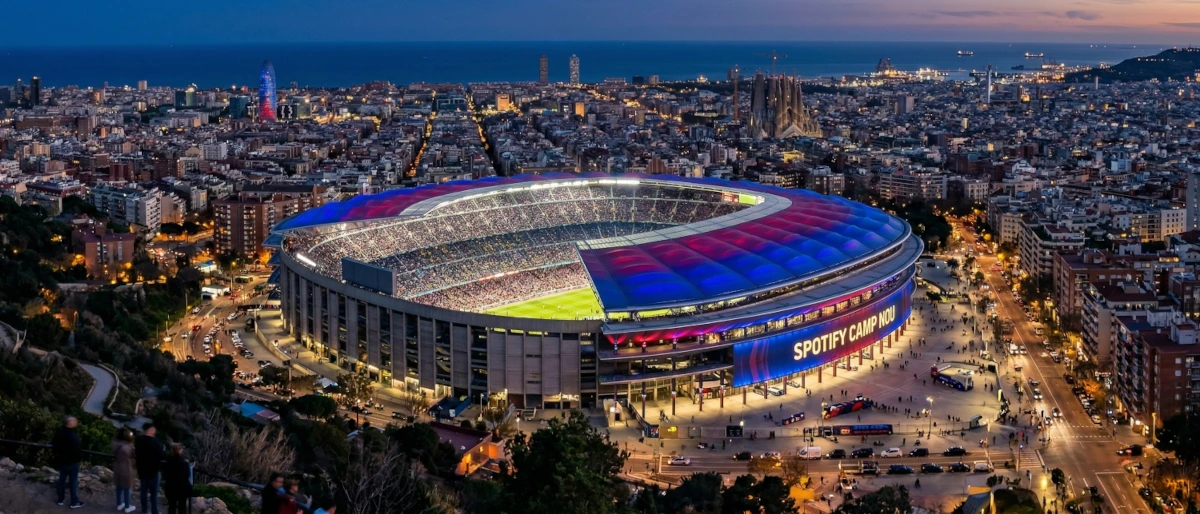
There are football matches you watch—and then there are football matches you travel for. El Clásico sits firmly in the second category. When the biggest fixture in club football comes to Barcelona, the city shifts. Cafés get louder, conversations sharper, and everything begins to orbit around one place: the legendary Spotify Camp Nou. This is not just a game; it’s a 48-hour immersion into the heartbeat of football itself during El Clásico 2026.
Day 1: The Arrival & Rituals
Barcelona is one of those cities that doesn’t rush you—but on a Clásico weekend, you feel the tension almost immediately. Start in the Gothic Quarter. It’s not about ticking off landmarks; it’s about absorbing atmosphere. Old stone streets, balconies draped with flags, and bars already replaying highlights from past Clásicos. You’ll hear it in passing conversations—lineups, injuries, predictions. Even if you don’t speak Spanish or Catalan, you’ll understand the tone.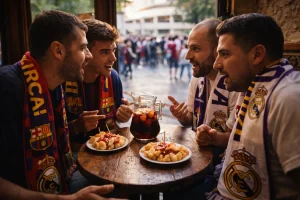
By late afternoon, the natural movement is toward Les Corts, the district surrounding the stadium. This is where the day subtly transforms from tourism into ritual. Shirts appear. Scarves are tied. Beer replaces coffee. There’s no need for a strict plan here. The best pre-match experience comes from simply settling into a local bar, ordering tapas, and watching the buildup unfold around you. The closer you get to the stadium, the more the energy tightens. It’s no longer just anticipation—it’s expectation.
The Matchday Countdown
Getting to the stadium is part of the story. Barcelona does this efficiently; the metro lines—Line 3 and Line 5—carry thousands of fans toward the same destination. You’ll hear chants starting underground, scarves already raised, and groups debating who starts up front. When you emerge at the newly renovated Spotify Camp Nou, the scale hits you. With a capacity of around 100,000, it remains one of the largest and most imposing cathedrals in Europe.
Arrive early. Not because you have to—but because you’ll want to. Outside, there’s a rhythm of street vendors and fans. Inside, it becomes something else entirely. And then it happens: the first notes of “Cant del Barça.” Nearly the entire stadium rises, scarves stretched above heads, voices joining in unison. It’s not just a song—it’s a shared identity. For a brief moment, before kickoff, everything feels synchronized—the crowd, the club, the city. This is why people travel.
Trying to describe the match itself misses the point. It’s rivalry, history, and spectacle compressed into 90 minutes. Inside the stadium, it feels personal. Every pass is reacted to. Every decision is debated instantly. The crowd doesn’t watch the match—they participate in it. And when something decisive happens, the reaction is not noise. It’s release.
Day 2: The Recovery
The morning after El Clásico feels different. Barcelona slows down again, but you don’t. The Barça Museum is the natural next step. It’s a narrative of dominance, identity, and evolution. Walking through it after experiencing a live match gives everything more context. Later in the day, head toward Barceloneta Beach. The contrast is necessary. From the intensity of the stadium to the calm of the Mediterranean, it resets the experience. You sit, you replay moments in your head, and you understand why Barcelona works so well as a football destination.
A weekend built around El Clásico 2026 isn’t just about ticking off a bucket-list match. It’s about immersion. It’s walking through a city that lives football without needing to announce it. At some point, you realize you’re no longer just watching football. You’re part of it.