City Guide
48 Hours in Seville: A Football Fan’s Guide to Sevilla FC Beyond the Cathedral
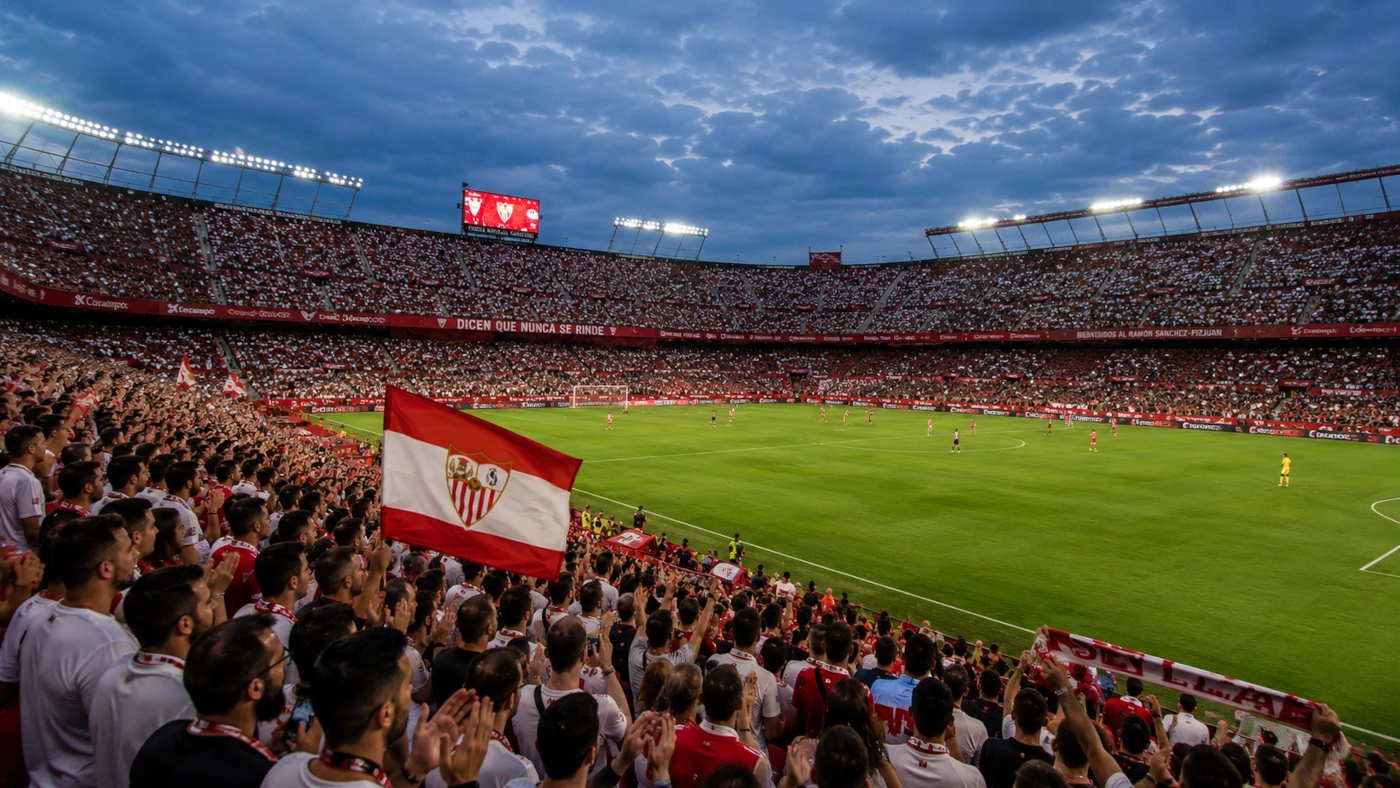
Seville sells itself as a city of orange-blossom afternoons—flamenco echoing off whitewashed courtyards, tapas plates passed across marble bar tops, the Guadalquivir catching the last light of the day. But on matchday, the rhythm changes entirely. In the northeast of the city, the Estadio Ramón Sánchez-Pizjuán becomes one of Spain’s most feared away trips, a cauldron built by a club with more European silverware than almost anyone else on the continent. For the traveling fan, Seville isn’t a detour from a footballing weekend—it’s one of the sport’s most complete destinations, where history, heat, and noise collide in equal measure.
Day 1: Cathedrals, Courtyards, and the Old City
You begin, as you should in Seville, with a slow morning in Barrio Santa Cruz. This is the old Jewish quarter—a maze of narrow, sun-dappled alleys, hidden plazas, and orange trees that perfume the entire district. Wander past the Seville Cathedral and the Real Alcázar, two of the finest examples of Andalusian architecture in the world, before the afternoon heat sends you looking for shade and a table.
Lunch here is not a quick affair. Find a bar near Plaza de España and order in the local way: small plates, shared, over a couple of hours—jamón, salmorejo, and fried pescaíto, washed down with a chilled glass of fino sherry. This is a city that treats eating as a civic ritual, and it’s the perfect grounding before the intensity of a night at the stadium. Sevilla FC’s identity was built in neighborhoods like this—patient, proud, and deeply local—long before it became a five-time European champion.
The Matchday: Nervión Turns Red and White
By Day 2, the postcard version of Seville gives way to something rawer. You head north to Nervión, the working-class district that has surrounded the club for over a century. Bars along Avenida de Eduardo Dato fill hours before kickoff, packed with supporters in red and white, radios and phones tuned to pre-match build-up. The primary route in is Metro Line 1, stopping at Gran Plaza or Nervión, both a short walk from the ground.
Inside the Estadio Ramón Sánchez-Pizjuán, the atmosphere is famously hostile to visiting teams—and famously loyal to its own. The stands rise close and steep around the pitch, and when the Biris Norte, the club’s historic ultras group, get going behind one goal, the noise rolls around the bowl with nowhere to escape. Sevilla FC has lifted the UEFA Cup and Europa League a record number of times, and there is a hard-earned confidence in the ground that comes from genuinely knowing how to win in Europe. This isn’t a stadium built for spectacle—it’s built for pressure.
The Exclusivity Factor
Sevilla FC’s European nights and derby fixtures against Real Betis sell out fast, and official allocations for visiting fans are often limited to a small away end. At Yourticketnet.com, we specialize in the secondary market, providing a secure, verified pathway to seats so you don’t have to risk your trip to Andalusia on unverified street sellers or “touts.”
Post-Match: Crossing the River to Triana
When the final whistle blows, don’t rush straight back to your hotel. Cross the Guadalquivir into Triana, the birthplace of flamenco and one of the liveliest neighborhoods after dark. Along Calle Betis, riverside bars fill with fans re-living the match over cold beer and late-night tapas, with the illuminated Torre del Oro glowing across the water. It’s a fitting way to close the loop—from the tension of Nervión back to the unhurried, sensory Seville you started with.
If you’re lucky, you’ll catch an impromptu guitar or a few claps of palmas drifting from a side-street bar—a reminder that in Seville, football and flamenco share the same pulse: passionate, rhythmic, and utterly unscripted.
Why Seville Delivers Something Different
Madrid has grandeur. Barcelona has scale. Seville offers heat and history. It lets you spend a morning inside a UNESCO World Heritage site and an evening inside one of Europe’s most intimidating away grounds. It is a city that treats football not as entertainment bolted onto tourism, but as a genuine extension of its identity—proud, stubborn, and steeped in European success most clubs only dream of.
As you pack your bags the next morning, you’ll realize the trip was never just about the scoreline. It was about watching a city that has quietly built one of the greatest European track records in the sport—and understanding, finally, why Sevilla FC fans wear that history with such quiet, defiant pride.